
NGC Experience: Kory Franklin
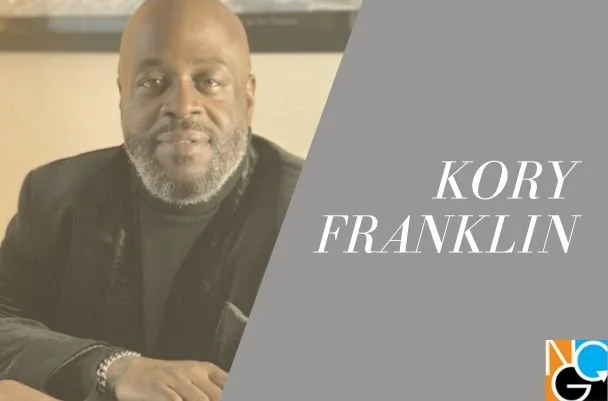
When the conversation began, Kory Franklin was fresh off a quick walk outside with his dogs. Just a normal moment. A little unexpected warmth in a North Carolina January.
That’s the thing about Kory. He doesn’t present himself like a “leadership guy” trying to perform leadership. He shows up like a real person first. Then he gets to work.
And his work, in his words, is “helping businesses and business owners turn chaos into clarity.” What that means is building the business owner so they can build a growing business. He even laughs at how cliche it sounds, then corrects it: the chaos isn’t just external. It’s “the internal stuff that we go through as entrepreneurs and business owners.”
So when Kory joined a NextGen Center cohort, it wasn’t because he needed someone to convince him that leadership mattered. He already lives in the messy middle of leading, coaching, advising, and building. It was because he wanted to sharpen his edge, tighten his foundation, and keep growing.
Because that’s who he is.
“I’m a student… a continuous student.”
Kory describes himself as someone who doesn’t enter programs with a rigid checklist of demands and explicit goals. He’s not shopping for a quick fix or a catchy process to repeat.
“I don’t really go in with a goal too specifically,” he says. “I was looking for improvement, because I am a student. I’m a continuous student, and I like to learn and understand.”
He’s taken leadership classes before. He’s seen a lot. But he didn’t join NextGen Center because he assumed he already knew it all.
He joined because he wanted to find what he didn’t know.
And there was something else happening in the background, too. A transition. A shift into more visible leadership, more responsibility, more moments where people are watching how you move.
He says he’s been “moving more into leadership roles” and wants to really show up for the people who depend on him. “It’s just the way that I’m structured and built.”
Kory doesn’t describe leadership as a shiny ambition. He describes it as a calling that keeps finding him.
“I’m here to help. I’m here to guide people,” he says, “and I use my own experiences to help create the structure, identify pain points and challenges, so people can move the needle forward.”
Move the needle. That phrase comes up more than once.
For Kory, leadership isn’t vibes. It’s progress.
How Brian got his yes
Kory didn’t stumble into NextGen Center through an ad or a random Google search. It came through community.
He was referred to Brian through The Greater Durham Black Chamber of Commerce, where Kory is also a chair. “Brian and I had two or three conversations,” he says, and it quickly felt like a good fit to join the cohort.
When he talks about what sealed the decision, he doesn’t point to a sales pitch. He points to communication.
“The way he communicates,” Kory says. “Very specific and intentional. Very authentic and intentional. He was easy to connect with, the right energy and vibe.”
This is subtle, but important: Kory isn’t looking for someone to impress him. He’s looking for someone he can work with. Someone who can meet him at a level of seriousness, honesty, and intention.
The tools he didn’t just learn, but used immediately
Some people take a leadership program and file it away under “good experience.” Kory took what he learned and put it to work like it was a new wrench in his toolbox.
He was already familiar with the GROW model. But the difference here was repetition, practice, and integration. “I really started using it in the program,” he says, “along with the V for vision.”
Then he says something that tells you how he thinks:
“I’ve been using it since day one,” he explains, because he does business coaching, and he immediately started implementing it into his coaching work and even his personal life.
He talks about active listening, understanding value, and the reality that people lean on him. And in one of the program exercises, he drilled down into what he called his “five core values.” Not theoretical values. His values. The ones that hold up his decisions and his relationships.
And then comes the kind of detail you only get from someone who actually uses what they learn: He keeps his “GROW” resource right there with him when he’s on calls. It’s not just in his head. It’s physical. Present. A reminder.
What surprised him was not a new idea. It was a new discipline.
When you’ve coached, advised, led teams, and built businesses, you’ve heard the phrase “active listening” a thousand times.
But Kory doesn’t treat it like a slogan. He treats it like a skill with consequences.
“You have to actively listen and pay attention to the person,” he says. But at the same time, you’re also paying attention to what you’re bringing into the conversation as the listener.
He also calls out feedback. He believed he already gave decent feedback, but “there was definitely room for improvement.”
Then he lands the point that feels like the heart of his takeaway:
“What I’ve learned is you allow people to walk themselves into their own answer.”
That’s coaching. That’s leadership. That’s restraint. That’s respect.
And it matters even more now, he says, because the world is “very shifty and super sensitive.”
So the path forward isn’t to become louder or sharper. It’s to become more human.
“We have to get back to being people,” Kory says, “and make sure that we find connection and without judgment.”
The cohort didn’t feel like a networking room. It felt like people.
If you’ve ever joined a cohort, you know the first few minutes can feel like a silent scan: Who’s in here? Who’s confident? Who’s guarded? Who’s trying to win?
That was not the case in this group as the cohort got started. “The community was great,” he says. “Everyone, we all got along.” He admits that people often enter cautiously. Then he smiled.
“I’m just a comfortable person.”
That comfort matters. Especially in breakout rooms, where the experience either becomes real or stays surface-level. Kory credits Brian with setting the tone and making it easier for everyone to communicate comfortably.
One of his favorite moments was the exercise where participants had to describe one another. Not rate. Not judge. Describe with care.
You could see the intention, he says. The thoughtfulness. And, tellingly, the absence of negativity.
How Kory explains the program to other people
Kory doesn’t pitch the program like a brochure. He pitches it like Kory.
He tells people, “When you’re ready to get some act right, I have a program that you need to be a part of.”
And when they laugh and ask what he means, he gets direct:
“When you’re ready to be responsible, to take some accountability and grow, this is program you need.”
He’s already sent people the link. He’s already decided he’ll do it again in the future, just to stay sharp. Because for Kory, this isn’t a one-time experience.
It’s maintenance. It’s training. It’s the discipline of becoming the kind of person other people can trust when it’s messy.
And maybe that’s the best summary of his whole story: Kory helps other people build structure because he keeps choosing it for himself.
Want to embark on your transformative leadership journey?
Learn more about the Foundation for Effective Leadership program today. Or, drop us a direct line here.